
NCCIA Arrests Suspect in Alleged TikTok Saudi Visa Fraud in Faisalabad
Pakistan's NCCIA has arrested a suspect in Faisalabad over an alleged Saudi visa fraud scheme promoted through TikTok. Investigators reportedly recovered two mobile phones and 10 SIM cards and examined financial accounts linked to the case.
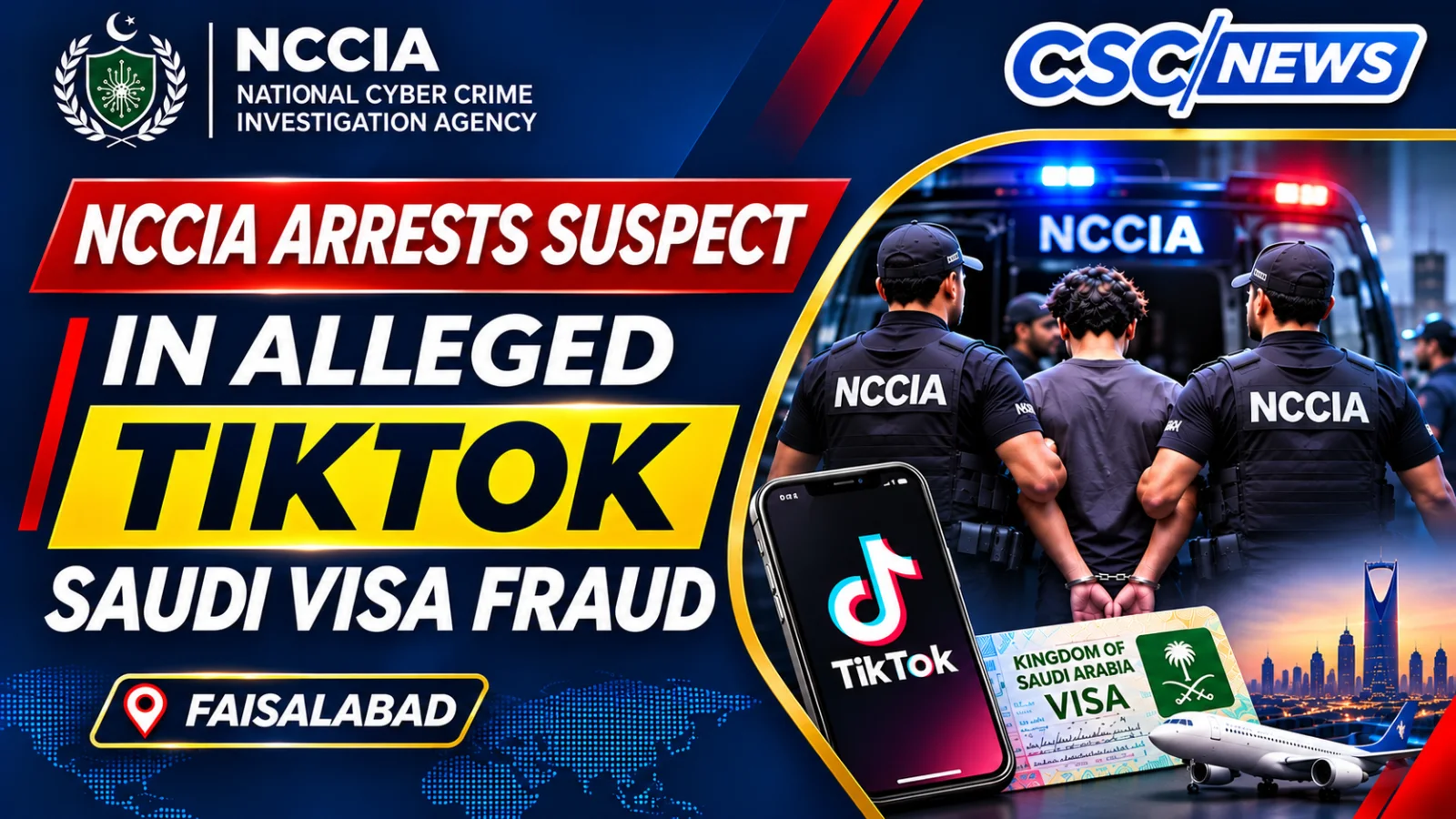
# NCCIA Arrests Suspect in Alleged TikTok Saudi Visa Fraud in Faisalabad
Faisalabad, Pakistan — October 22, 2026: The National Cyber Crime Investigation Agency (NCCIA) has arrested a suspect in Faisalabad over an alleged online fraud scheme involving Saudi Arabian visa offers promoted through TikTok.
According to information reported by Dawn, the suspect allegedly used a TikTok account to attract people seeking visas for Saudi Arabia. Authorities say the scheme involved fabricated documents and the transfer of suspected fraudulent proceeds into financial accounts, allegedly in collaboration with other individuals.
Evidence Recovered During the Operation
The NCCIA reported recovering two mobile phones and 10 fake SIM cards during the operation. The agency also identified an Easypaisa account and an alleged merchant account in connection with the investigation.
A criminal case has been registered against the suspect. Investigators are examining the alleged activities and financial links associated with the scheme.
The allegations remain subject to investigation and judicial proceedings. An arrest does not establish guilt.
NCCIA Warns Against Social Media Visa Scams
NCCIA Director General Syed Ali Nasir Rizvi warned that strict legal action would be taken against people using social media platforms to deceive citizens through overseas employment and visa offers.
The agency also advised the public to verify visa advertisements before transferring money and to report suspicious social media accounts.
According to NCCIA statistics for 2026 cited in the report, financial fraud accounted for 48% of complaints received by the agency.
How Fake Visa Offers Can Put Applicants at Risk
Social media platforms can be useful for finding employment information, but an attractive advertisement does not establish that a visa offer is genuine.
Fraudsters may use misleading advertisements, fabricated documents, false promises of quick processing, or demands for advance payments to target applicants.
Users should be especially cautious when an individual claims to guarantee a visa, pressures them to pay immediately, or refuses to provide verifiable recruitment and application details.
These are general scam-awareness indicators, not additional allegations established against the suspect in this particular case.
LWF-CSC Cyber Safety Advisory
The Lasani Welfare Foundation Cyber Security Cell (LWF-CSC) advises individuals seeking overseas employment or visas to verify offers through relevant official authorities and properly licensed recruitment channels.
Never rely solely on screenshots, social media profiles, or payment receipts as proof that an overseas visa application is legitimate.
Avoid sharing one-time passwords, banking credentials, or sensitive identity documents with unverified agents. If you suspect fraud, preserve relevant evidence and report the matter through official channels.
Source: Dawn, October 22, 2026.
Editorial note: The reported arrest and investigation details are attributed to NCCIA as covered by Dawn. The preventive guidance in this article has been added by LWF-CSC for public awareness.
What you should do
- Verify Saudi visa offers through official government channels before paying any fees.
- Avoid sending advance payments to unverified agents, personal bank accounts or mobile wallets.
- Check the registration and licensing status of overseas recruitment agencies before proceeding.
- Never share OTPs, PINs, passwords or sensitive identity documents with unknown individuals.
- Save suspicious TikTok profiles, messages, payment receipts and other evidence, and report suspected fraud to NCCIA.
Already lost money? Call your bank's helpline at once, then file a complaint with NCCIA. How to report
Sources
- Dawndawn.com
By LWF-CSC Desk
Scam alerts and safety guides from the team at the LWF Cyber Security Cell.
All articlesRead next
 Law & policyNCCIA says 76 people arrested in cyber patrol crackdownPakistan's NCCIA says 17 cyber patrol units are monitoring online threats nationwide, with more than 76 suspects arrested. The units focus on cybercrime, fake news and online harassment, using AI-assisted monitoring tools.
 Social mediaNCCIA: fake profiles and online blackmail are crimes - report them on 1799NCCIA says making fake social media profiles of women, leaking their pictures or personal data and blackmailing them online are punishable cybercrimes, and asks victims not to stay silent.
 Mobile & SIMPTA warns: calls from 'PTA', banks or couriers asking for your OTP or CNIC are fraudScammers pose as PTA staff, banks and courier companies and threaten to block your SIM or account to get your OTP, CNIC, PIN or password. Here is how the trick works and what to do.
Targeted by a scam like this? Tell us — the cell's help is free.
Get help